
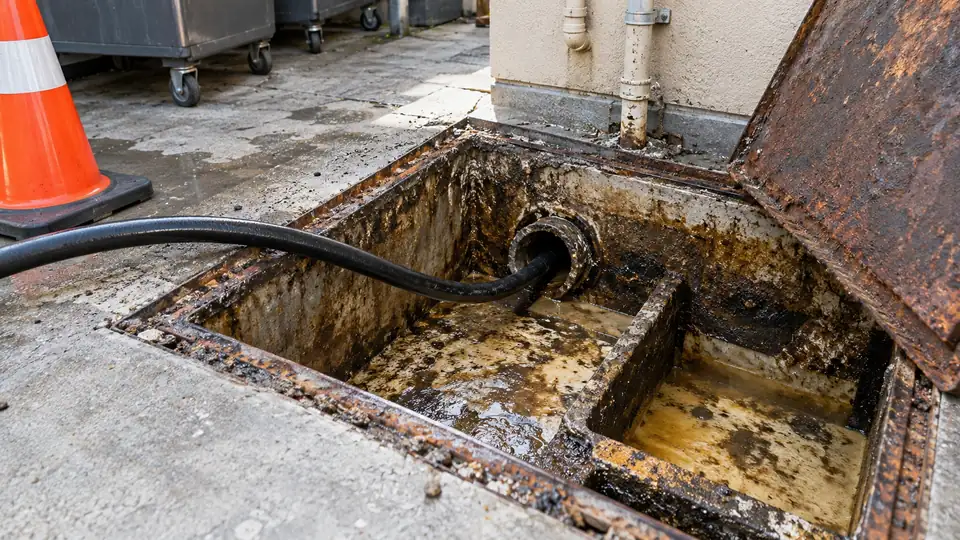
Grease Interceptor Line Jetting Colton Kitchens Rely On
Grease interceptor line jetting Colton kitchens book clears the pipes that carry kitchen water into your grease interceptor and out to the sewer. When those lines clog, the interceptor backs up into the kitchen even if it was just pumped. We jet both sides, camera them and leave a log for your files.
Restaurants, cafes and landlords with food tenants book this most. It works hand in hand with our restaurant drain cleaning service, focused on the pipes around the tank.
What Interceptor Line Jetting Includes
We clean the parts of the system a pump truck does not touch.
- Inlet line jetting: The line from the kitchen to the interceptor gets jetted to remove the grease coating the walls.
- Outlet line jetting: The line from the interceptor out to the building sewer and lateral is cleared so water can leave freely.
- Tee check: We look at the inlet and outlet tees, which keep grease in the tank. If one is missing or broken, we tell the owner.
- Camera check: We record both lines so you can see they are clean, or spot damage.
- Service log: A dated log lists which lines were jetted and what came out.
- Hauler coordination: We can schedule around your grease hauler's pump day.
Why Interceptor Lines Matter in Colton
Colton's grease rules make the interceptor a key part of every food business.
The City Requires Interceptors
- Colton expects most food businesses to have a standard interceptor in place.
- The city pairs that with a list of grease practices, posted in two languages.
- In the city's words, the unit has to be sized, installed and maintained right to work.
Clean Tanks Need Clean Pipes
An interceptor only works if water reaches it and leaves it. A clogged inlet backs grease up into the kitchen, while a clogged outlet can push grease past the tank and toward the city sewer.
Spills Bring Follow Ups
Many cities follow up after a grease spill or sewer overflow tied to a business. Clean lines and good records help you avoid that kind of trouble.
How We Jet Interceptor Lines, Step by Step
- Plan around pumping. We work on pump day or right after the tank is pumped out.
- Jet the inlet line. Using hydro jetting, we clean the line from the kitchen into the tank.
- Jet the outlet line. We clear the line from the tank to the building sewer.
- Check the tees. We confirm the inlet and outlet tees are in place and sound.
- Camera both lines. Our line camera checks show the clean pipe or any damage.
- Write it up. A dated record of both lines goes into your binder.
Interceptor Problems We Handle
Inlet Clogs
A grease trap backing up into the kitchen right after pumping usually means the inlet line is coated with grease.
Outlet Clogs
A grease interceptor outlet clogged with grease or solids stops water from leaving the tank, so it fills and backs up.
Missing or Broken Tees
Without tees, grease can flow straight through the tank. We report it so the owner can have it repaired.
Lines Past the Sample Box
The pipe between the sample box and the sewer can collect grease that slipped past the tank. We jet it as part of the outlet run.
Hydromechanical Trap Lines
Smaller under sink grease traps have short lines that clog fast. We clear those too.
What Interceptor Line Jetting Costs in Colton
Grease line jetting cost depends on line length, buildup and timing. We give a price on the phone after a few questions.
- Single visit: Priced by the number and length of lines.
- Paired with pumping day: Often lower, since the tank is already open and empty.
- Scheduled plan: Booked visits at a steady rate, timed with pumping.
- After hours: Added rate for visits after closing.
- What moves the price: Heavy buildup, hard to reach cleanouts and long outlet runs.
Call us for a quote that fits your kitchen and pump schedule.
Grease Trap vs Grease Interceptor
A grease trap is a small unit near the sink, while an interceptor is a large tank in the ground. Side by side, the two look like this:
| Point | Grease trap | Grease interceptor |
|---|---|---|
| Size | Small, often under or near the sink | Large tank, usually buried outside |
| Common in | Small kitchens and cafes | Most restaurants under city rules |
| Who empties it | Often staff, on a short schedule | A licensed grease hauler |
| Who jets the lines | A drain service | A drain service |
| How often it needs care | Often weekly or more | Based on use and local rules |
Many California cities use a 25 percent rule, which calls for pumping before grease and solids fill about a quarter of the tank. Ask the City of Colton whether the grease interceptor 25 percent rule applies to your site.
Typical Interceptor Calls Around Colton
Here are three grease interceptor line calls we handle most often for local kitchens:
- Kitchen backing up the day after pumping: Grease packed in the inlet line. Jetted and camera checked.
- Slow drains across the whole kitchen: Outlet line partly blocked with solids. Cleared to the sewer.
- Broken outlet tee: Found on camera and reported to the owner for repair.
Safe Work Around Interceptors
- No one enters the tank. Interceptors are confined spaces, and our work is done from the surface.
- Lids are kept closed whenever we step away.
- Odors are kept down by working fast and closing up tight.
- The area around the lids is cleaned and sanitized when we finish.
Where We Offer Interceptor Line Jetting
We jet interceptor lines for food businesses across Colton, including Downtown, South Colton, Cooley Ranch and East Colton Heights. Older kitchens keep us busy through drain cleaning in North Colton, and we also serve our San Bernardino drain service area.
- Fontana, Bloomington and Rialto, including grease interceptor line jetting Rialto kitchens book
- Grease interceptor line jetting Grand Terrace and grease interceptor line jetting Loma Linda
- Redlands and Highgrove
Every grease interceptor line jetting 92324 job comes with a service log.
Interceptor Line Questions
Why does my kitchen back up after pumping?
Pumping empties the tank but does not clean the pipes. Grease in the inlet or outlet line can still block flow until it is jetted.
Who handles the pump out?
Pumping is done by licensed grease haulers. We jet the lines and can work the same day as your hauler.
Do you leave records for inspections?
Yes. You get a dated service log showing which lines were jetted and what came out of them.